The narrow passage between two houses may be the only route to a garden where a new extension is planned. A mature tree could prevent machinery from approaching one side of the building, while a neighbouring property leaves little room for manoeuvring equipment. These restrictions can make foundation installation difficult before work has even begun. The challenge is not necessarily the size of the structure but the amount of usable space available for construction.
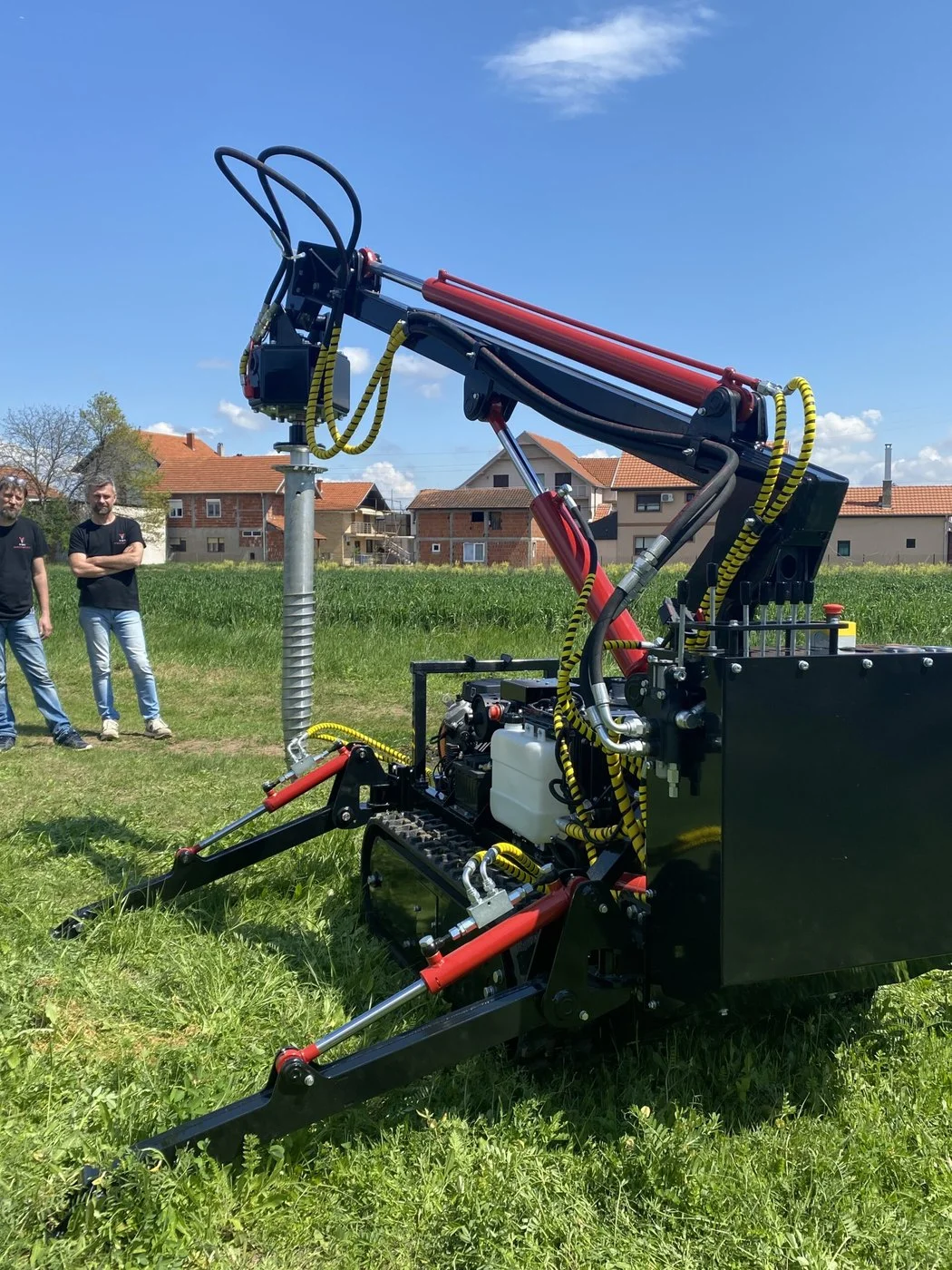
Screw pile foundations can provide a practical solution for certain restricted-access projects because installation does not always require the extensive excavation associated with conventional foundation methods. However, the piles still need to be transported, positioned and driven into the ground using equipment with sufficient mechanical capacity. Contractors can examine different hydraulic installation configurations at https://iron-mechanics.com/product-category/ground-screw-drivers/ when considering how machinery requirements vary between confined residential spaces and larger construction sites.
Successful installation depends on understanding the physical limitations of the property before equipment arrives. Entrance widths, overhead clearances, underground services and ground bearing conditions can all influence the installation method. A compact machine may solve one access problem while introducing another, particularly if it requires additional power equipment or space to control reaction forces.
Why Restricted Sites Complicate Foundation Work
Construction sites rarely provide uniformly clear working areas. Residential extensions, garden buildings and replacement structures are frequently built on properties containing existing foundations, drainage systems, fences and established landscaping. These features influence where workers can move, how materials are delivered and which types of equipment can operate safely.
A narrow entrance is often the most obvious restriction, but it may not be the most difficult. A machine that passes through a gate must still have enough room to turn, position its drive head and operate at the required foundation locations. The working envelope of a hydraulic installation system can be considerably larger than its transport dimensions.
Overhead obstacles introduce further complications. Tree branches, balconies, cables and roof overhangs may restrict the movement of machinery booms or the handling of long piles. Even relatively compact equipment can require additional vertical clearance when positioning a foundation element before installation.
Ground conditions also influence access. A garden may contain soft soil, buried construction waste or areas weakened by previous excavation. Machinery capable of travelling across firm ground might require additional preparation before operating safely on a less stable surface. Heavy equipment can damage paving or landscaping, creating restoration costs that were not included in the original construction estimate.
Limited working space can affect the sequence of installation. Completing one foundation position may temporarily obstruct access to another, while stored piles and tools can interfere with machine movement. Without a coordinated plan, crews may repeatedly move materials and equipment to create room for the next operation.
For these reasons, restricted-access foundation work requires a detailed assessment of the entire installation process. Simply identifying a machine small enough to enter the property does not establish that it can perform the required work.
Choosing Equipment for Confined Working Areas
Equipment selection should begin with the foundation design and the conditions encountered on site. The machine must provide sufficient torque for the specified piles while remaining manageable within the available space. Contractors also need to consider how piles will be handled, how the equipment receives power and where personnel can stand safely during operation.
Handheld hydraulic drivers may offer advantages on properties inaccessible to larger machinery. Their compact dimensions can make them useful for smaller ground screws and projects involving a limited number of installation points. However, the complete system may include a separate hydraulic power unit, hoses and equipment for managing reaction torque.
The position of these additional components matters. A narrow working area may accommodate the driver but leave insufficient space for its supporting arrangements. Hydraulic hoses must be protected from damage and positioned to avoid creating unnecessary hazards for personnel moving around the site.
Excavator-mounted installation equipment offers another possibility where the property provides suitable access. A compact excavator may be able to position the hydraulic drive at several locations without requiring personnel to handle the installation tool manually. Nevertheless, the machine must have adequate hydraulic capacity, appropriate operating clearances and a suitable arrangement for resisting installation forces.
Independent hydraulic drive heads can be considered for specialised installations using compatible carriers or purpose-built support arrangements. Their flexibility may be helpful where conventional machinery cannot be positioned, but the complete installation system must be assessed rather than the drive head alone.
Self-propelled tracked machines may be practical on larger properties where access is restricted but sufficient operating space remains within the construction area. Their ability to move independently between foundation positions can reduce handling requirements. However, transport dimensions, turning space, ground pressure and boom clearance must be checked before mobilisation.
The most appropriate configuration depends on the relationship between access restrictions and installation demands. A compact handheld system cannot be assumed suitable for a high-torque installation merely because it fits through a narrow passage. Equally, a more powerful tracked machine offers little practical benefit if it cannot reach the foundation positions.
Planning Access and Material Handling
A detailed site survey can prevent many of the delays associated with restricted-access construction. Contractors should establish the dimensions of entrances, passageways and working areas, then compare them with the complete operating requirements of the proposed machinery. Measurements should account for gates, steps, changes in ground level and any obstacles that cannot be removed.
Material handling deserves similar consideration. Steel screw piles may be relatively straightforward to transport individually, but their length and weight can make movement difficult through narrow passages or around corners. Longer elements may require mechanical assistance or alternative installation arrangements, depending on the pile system and engineering specification.
The organisation of the working area should address several practical requirements.
- Access dimensions. Measure the narrowest sections of the route and establish whether machinery can turn, unload and operate safely.
- Overhead clearance. Identify roof projections, branches, cables and other obstacles affecting pile handling or drive-head movement.
- Ground stability. Assess whether access routes and installation positions can support the equipment under expected operating conditions.
- Material storage. Choose locations that keep piles and accessories accessible without blocking movement or emergency routes.
- Equipment support. Allow space for hydraulic power units, hoses, adapters and any necessary reaction-torque restraint arrangements.
- Personnel movement. Establish safe working zones around rotating machinery, suspended components and other installation hazards.
These arrangements should be reviewed with the installation crew before work begins. Operators may identify practical difficulties that are not apparent from drawings or photographs, particularly where existing structures restrict visibility or movement.
Delivery planning can also influence the installation programme. Bringing all materials onto a confined property at once may obstruct access, while repeated deliveries can introduce transport delays. A staged approach may be more suitable where storage space is limited.
Contractors should establish whether temporary removal of gates, fence panels or other non-structural features would improve access. Any such work requires appropriate permission and arrangements for safe reinstatement. Alterations to structural elements or shared property boundaries should not be undertaken without the necessary approvals.
Careful preparation reduces the likelihood of arriving with unsuitable equipment or discovering that essential materials cannot reach their intended installation positions. It also gives contractors a more reliable basis for estimating labour requirements and project duration.
Protecting Existing Structures and Underground Services
Restricted sites often contain infrastructure that is difficult to identify through visual inspection alone. Drainage pipes, electrical cables, water supplies and communication lines may pass close to the proposed foundation positions. Their presence can impose restrictions on pile placement, installation depth and the equipment used.
Contractors should obtain available utility information and follow appropriate procedures for locating buried services before installation begins. Drawings may be incomplete or outdated, so further investigation can be necessary where records do not provide sufficient confidence. The method and extent of investigation should reflect the potential consequences of damaging the services concerned.
Screw piles do not require the same excavation arrangement as many conventional foundations, but this does not eliminate underground risks. A rotating steel element can damage buried infrastructure if its position is not established. Installation must therefore follow the project’s approved design and service-protection requirements.
Existing foundations present another consideration. Installing piles close to a house, retaining wall or neighbouring structure requires an understanding of the surrounding ground and the possible interaction between foundation elements. Restricted access should not encourage contractors to alter pile positions without engineering approval.
Trees and established landscaping may also influence the foundation layout. Roots can obstruct installation, while construction activities may damage important parts of a tree’s root system. Where trees are protected or have substantial structural or landscape value, appropriate assessment and protective measures may be required.
Ground movement and installation resistance should be monitored in accordance with the design and method statement. Unexpected changes may indicate obstructions, unsuitable soil or other conditions requiring investigation. Applying additional torque without understanding the cause can damage the pile, equipment or nearby infrastructure.
The principal advantage of careful site investigation is that it allows access limitations and technical risks to be addressed together. A foundation method is only suitable when it can be installed without creating unacceptable risks to the existing property or its surroundings.
Maintaining Accuracy Without Large Machinery
Compact equipment can be valuable on restricted sites, but foundation installation still requires accurate positioning and alignment. The designer specifies where each pile must be installed and what performance it must achieve. Limited working space does not reduce the importance of these requirements.
Pile positioning begins with reliable setting-out information. Contractors should confirm installation points using suitable surveying methods and identify reference locations that will remain accessible throughout the work. On confined sites, temporary materials or equipment can easily obscure markings, making a dependable system of reference particularly useful.
Alignment must be monitored as the pile enters the ground. Rotational resistance, uneven soil conditions or incorrect equipment positioning can cause deviation from the intended installation angle. Correcting such movement may become increasingly difficult as installation progresses.
Hydraulic machinery can provide controlled rotation, but accurate installation depends on the complete operating arrangement. The drive head, pile connection, supporting structure and operator’s control all influence how effectively the specified alignment is maintained.
Contractors should also establish a procedure for dealing with unexpected resistance. If a pile stops advancing or behaves differently from the design assumptions, the cause may need to be investigated. Continuing installation without appropriate assessment could damage the foundation element or result in an unacceptable installation.
Quality records remain necessary regardless of machine size. Depending on the project, these may include installation depth, measured torque, pile identification, alignment checks and observations of unusual ground conditions. The relevant documentation should follow the foundation designer’s requirements and any applicable project specifications.
Working in a restricted area can make these tasks more demanding because personnel have less freedom to reposition themselves or observe the installation from different angles. The installation method should provide sufficient visibility and access for the checks required to confirm acceptable work.
Managing Costs and Construction Schedules
Restricted access can affect project costs in ways that are not immediately apparent from the number of foundation points. Moving materials by hand, protecting existing surfaces and repositioning equipment in confined spaces may require more working time than a similar installation on an open construction site.
Machinery selection influences these expenses. Smaller equipment may reduce transport and access difficulties but require additional personnel or longer installation times. Larger machinery may complete individual installations efficiently yet introduce costs associated with mobilisation, temporary access alterations or ground protection.
Contractors should assess the complete installation cycle rather than comparing equipment rental or purchase prices in isolation. A machine’s suitability depends on how efficiently it can reach each position, maintain alignment, handle the required piles and complete the necessary quality checks.
Unexpected ground conditions remain a source of financial uncertainty. Restricted working space can make remedial operations more difficult, particularly if a pile cannot be installed at its intended location. Allowing for appropriate investigation and technical decision-making is preferable to assuming every foundation element will advance without difficulty.
Clear communication with the property owner is also valuable. Access requirements, temporary disruption, material storage and potential landscaping impacts should be explained before work begins. Establishing realistic expectations reduces the likelihood of disagreements when unavoidable site restrictions affect the programme.
A successful restricted-access installation is not defined simply by getting machinery onto the property. It requires a foundation system that satisfies the engineering design, equipment that can operate safely within the available space and a working procedure that limits unnecessary disturbance. When access planning and technical requirements are considered together, contractors can approach confined construction sites with more reliable schedules and better control over installation costs.