Industrial automation is evolving at a remarkable pace, bringing together advanced technologies that drive operational efficiency, product quality, and workplace safety. As companies strive for greater productivity and resilience, they are increasingly investing in intelligent solutions, from custom Stellite parts to AI-driven analytics and robotics. These advancements are not only lowering costs but also enabling human workers to focus on higher-value tasks that require problem-solving and creativity.
At the same time, the integration of cutting-edge automation tools raises important questions around security, adaptability, and the future of the workforce. To thrive in this changing landscape, industrial organizations need to stay ahead of technology trends while maintaining robust safeguards. This article explores the most significant trends influencing the industrial automation sector and provides actionable insights for business leaders.
AI Integration in Industrial Processes
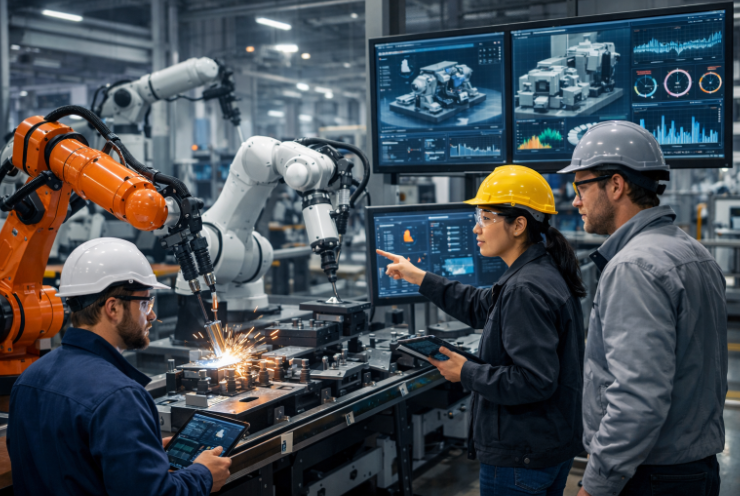
Artificial Intelligence (AI) has rapidly become a crucial element in the modernization of industrial operations. By leveraging AI-powered systems, companies can make faster and more accurate decisions, spot inefficiencies in real time, and anticipate equipment failures before they disrupt production. These applications are especially valuable in complex environments such as oil refineries, automotive plants, and semiconductor manufacturing, where downtime can be costly.
The use of AI goes beyond predictive maintenance. It actively improves process optimization, allowing engineers to identify bottlenecks, maximize throughput, and minimize waste. Emerging AI tools can automatically analyze sensory data and recommend adjustments to keep operations running smoothly. According to a report by McKinsey & Company, manufacturers using AI report productivity increases of up to 20 percent.
Additionally, AI’s ability to sift through massive datasets empowers organizations to identify hidden patterns that would be impossible for humans to detect unaided. Machine learning algorithms can analyze years of production data to uncover anomalies, recommend preventive measures, and reduce downtime. Some leading manufacturers are implementing “digital twins,” or virtual representations of physical assets, to test updates and predict equipment responses before making real-world changes. This approach is revolutionizing the speed and confidence with which organizations can make process modifications.
Deployment of Humanoid Robots
Humanoid robots are becoming an increasingly common sight on factory and warehouse floors. Organizations such as Agility Robotics have developed robots capable of moving, sorting, and transporting goods efficiently within warehouses. These robots work side by side with human staff, assisting with repetitive and physically demanding tasks. Such collaboration not only improves safety and job satisfaction but also addresses ongoing labor shortages in logistics and supply chain sectors.
Unlike traditional automation, which often requires highly specialized infrastructure, the latest humanoid robots are designed to operate safely alongside people and adapt to dynamic environments. Their flexibility and ease of deployment reduce the time and costs associated with upgrading legacy systems, making them highly attractive for large and small operations alike.
The trend toward collaborative robotics, sometimes referred to as “cobots,” is accelerating as businesses seek to empower existing teams. Cobots are designed with advanced sensors and intelligent control systems that enable them to perform delicate or intricate tasks and respond to human gestures and commands. This new breed of robots can take on new roles quickly, making automation more accessible for smaller firms and helping the entire sector stay competitive in a rapidly changing global market.
Addressing Cybersecurity Challenges
The growing reliance on interconnected devices and smart equipment in industrial environments brings a heightened risk of cyberattacks. According to a recent survey from the Cybersecurity and Infrastructure Security Agency (CISA), industrial control systems are increasingly targeted by ransomware and other forms of malicious software. Many of these systems were not originally designed with cybersecurity in mind, leaving them vulnerable to exploitation.
Companies must be proactive in implementing security protocols, including network segmentation, routine patching, and employee training. With billions of dollars at stake, robust cybersecurity isn’t just a technical priority; it is fundamental to protecting the business, its workers, and its reputation.
Embedding cybersecurity into every layer of automation systems is essential. Regular risk assessments and simulations of real-world threat scenarios can help organizations discover vulnerabilities before they are exploited. In addition, compliance frameworks such as ISO/IEC 62443 offer industry-specific guidance for protecting industrial automation and control systems from emerging threats. Ongoing collaboration among IT, engineering, and business units ensures threats are identified and addressed holistically, rather than in isolation.
Development of Smart Infrastructure
Innovative partnerships between technology vendors and industrial clients are driving the rise of smart buildings and factories. These integrated solutions leverage AI, cloud computing, and the Industrial Internet of Things (IIoT) to optimize energy use, automate environmental controls, and enhance security. For example, many sports venues and commercial complexes are adopting advanced building automation to monitor temperature, lighting, and access in real time.
Smart infrastructure not only increases operational efficiency but also improves the workplace experience for employees. The ability to remotely monitor and adjust system parameters offers facility managers new flexibility as they balance occupancy, safety, and energy savings. Such initiatives signal a broader shift toward data-driven facility management and more sustainable operations overall.
Another advantage of smart infrastructure is its scalability. Whether upgrading a single facility or scaling across an entire enterprise, organizations can tailor connected devices and automation solutions to meet site-specific needs. The collection of granular data from connected infrastructure not only supports continuous improvement but also enhances regulatory compliance, asset management, and long-term capital planning, laying the foundation for ongoing innovation and operational excellence.
Future Outlook
The future of industrial automation will focus less on radical transformation and more on enhancing interoperability and flexibility. Innovations are expected to prioritize solutions that integrate smoothly with current technologies, allowing companies to evolve without expensive or disruptive overhauls. Businesses will benefit from semi-autonomous robots capable of learning on the job and adjusting to changing requirements and processes.
While technological breakthroughs will continue to make headlines, steady improvements in adaptability, safety, and ease of integration are more likely to drive lasting success.
The path ahead promises even greater connectivity enabled by 5G, edge computing, and expanded IIoT ecosystems, making real-time data collection and decision-making commonplace across all types of industrial settings. As companies increasingly rely on digital tools, ongoing investment in workforce upskilling will ensure that both human expertise and machine intelligence work together efficiently. Ultimately, the convergence of these trends will enable organizations to build more resilient, sustainable, and intelligent operations for the future.
In summary, industrial automation is on a path of continuous advancement thanks to the integration of AI, the rise of humanoid robots, tighter cybersecurity, and the evolution of smart infrastructure. Industrial leaders who stay current with these trends and make prudent investments will be better equipped to achieve lasting competitive advantage and resilience in the years ahead.